
RisingWave vs ksqlDB: Which Streaming SQL Platform Should You Choose?
RisingWave is a distributed PostgreSQL-compatible streaming database with full SQL support and independent scaling, while ksqlDB is a SQL layer for Kafka Streams limited to Confluent's ecosystem. Compare SQL capabilities, scalability, and deployment flexibility.
Resources
Seamlessly Scale as Your Event-driven Applications
Outgrow KsqlDB Capabilities
Outgrow KsqlDB Capabilities
PostgreSQL
RisingWave speaks PostgreSQL-style SQL, enabling users to dive into stream processing in much the same way as operating a PostgreSQL database.
Lack of Composability
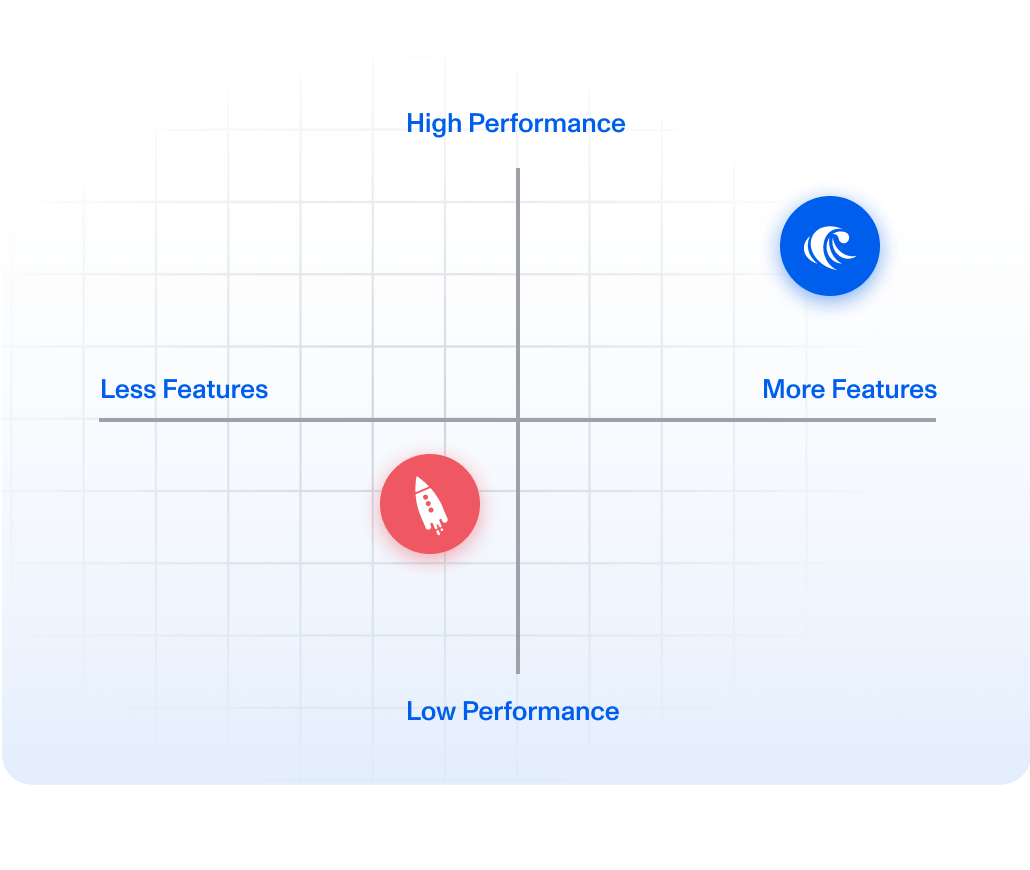
RisingWave support composable multi-stage data pipelines which KsqlDB lacks. Essentially, KsqlDB can only be used for very basic use cases.
Connectivity and Integration
RisingWave provides built-in diverse data connectors. In contrast, KsqlDB is limited to Apache Kafka integration.
Struggling with Missing SQL Functionalities?

RisingWave

RisingWave is a PostgreSQL-compatible system that allows you to query Kafka and other event streams with full PostgreSQL-style SQL, providing advanced capabilities that ksqlDB cannot.
KsqlDB
KsqlDB, on the other hand, has limited SQL capabilities. Many advanced features like joins beyond simple equi-joins, complex windowing functions, and subqueries are missing.
RisingWave
Ksqldb
Want Streaming SQL for More Than Just Confluent Kafka?
RisingWave brings streaming SQL to a wide array of event streaming systems. It integrates not only with Confluent but also with Amazon MSK, Amazon Kinesis, Google Pub/Sub, NATS, Redpanda, and many more.
Afraid of High Costs or Limited Scalability?
RisingWave
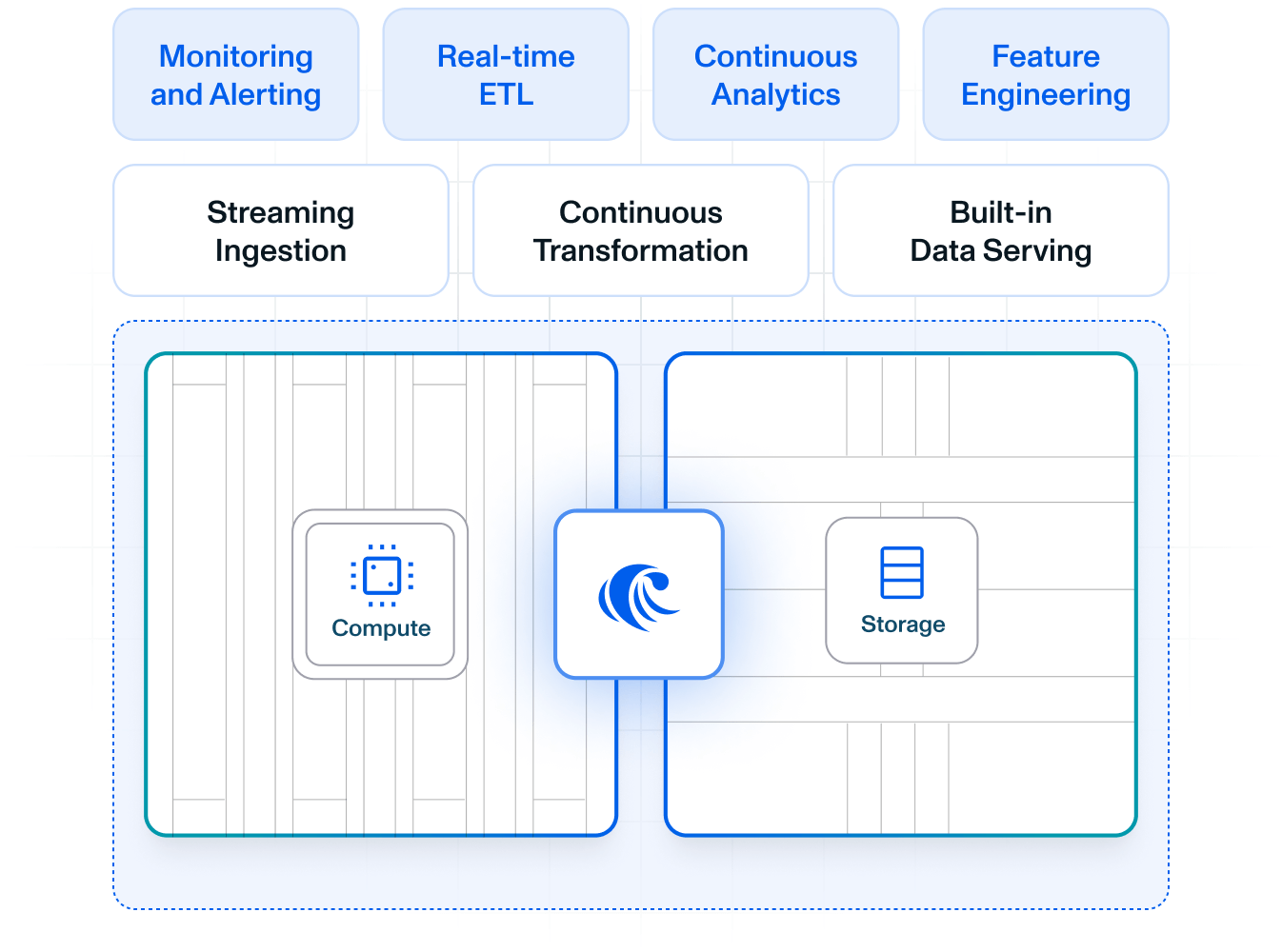
RisingWave adopts a decoupled compute and storage architecture, allowing you to scale compute and storage independently. This ensures better performance at a lower cost as your data volume grows.
KsqlDB
The open-source version of KsqlDB is restricted under the Confluent Community License and the commercial offering is tightly coupled to Confluent Cloud.
The open-source version of KsqlDB is restricted under the Confluent Community License and the commercial offering is tightly coupled to Confluent Cloud.
How does RisingWave compare to ksqlDB feature by feature?
Architecture Comparison
Deployment and Scalability
Data Sources and Sinks
Ecosystem and Tooling
RisingWave’s PostgreSQL compatibility and advanced architecture make it more powerful and flexible for handling complex data workloads. It also provides superior fault tolerance and consistency, ensuring your data is always accurate and recoverable.
| KsqlDB | RisingWave | |
|---|---|---|
| SQL Compatibility | Basic SQL, limited features | PostgreSQL-compatible SQL with advanced features for complex queries |
| Separation of Compute/Storage | Compute and storage tied to Kafka | Decoupled architecture for independent compute and storage scaling |
| State Backend | RocksDB via Kafka | Native tiered storage for optimized performance and scalability |
| Data Consistency | At-least-once and exactly-once via Kafka Streams | Supports exactly-once semantics, out-of-order processing, and snapshot reads |
| Fault Tolerance | Relies on Kafka, no checkpointing | Checkpointing and consistent snapshots for fast recovery |
| High Availability | Supported | Supported, with more flexible recovery mechanisms |
RisingWave
| SQL Compatibility | PostgreSQL-compatible SQL with advanced features for complex queries |
| Separation of Compute/Storage | Decoupled architecture for independent compute and storage scaling |
| State Backend | Native tiered storage for optimized performance and scalability |
| Data Consistency | Supports exactly-once semantics, out-of-order processing, and snapshot reads |
| Fault Tolerance | Checkpointing and consistent snapshots for fast recovery |
| High Availability | Supported, with more flexible recovery mechanisms |

Why choose RisingWave over ksqlDB?
RisingWave delivers the flexibility, performance, and scalability that ksqlDB lacks. With its advanced SQL capabilities, easy deployment, and rich ecosystem, RisingWave is the ultimate choice for stream processing in real-time, allowing you to manage complex data workloads effortlessly.
Frequently Asked Questions
Common questions about choosing between RisingWave and ksqlDB
Is RisingWave a replacement for ksqlDB?
Does RisingWave require Apache Kafka?
How does RisingWave's SQL compare to ksqlDB's SQL?
Can RisingWave scale independently from Kafka?
Is ksqlDB open source?
Does RisingWave support exactly-once semantics like ksqlDB?


